
The “Constructive Feedback Model” is one of the best tools we’ve found for giving feedback. It takes the sense of personal attack out of giving feedback, helps you use “I” statements, and helps you express your feelings so that the receiver can more fully understand the impact of their behavior on you. The model is below.
Constructive Feedback Model
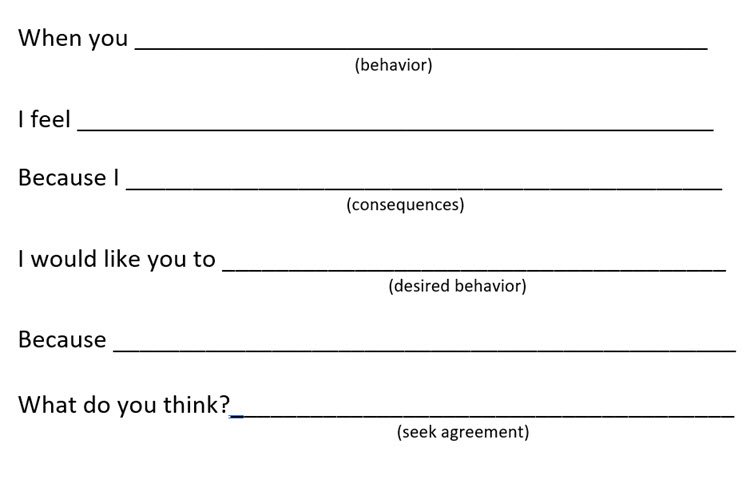
Using the Constructive Feedback Model
- Use the Constructive Feedback Model as it fits the situation by selecting the first two lines, the first three lines, the first four lines or the whole model (whichever you think will be the most effective approach for the situation). Complex situations tend to require more lines of the model.
- Focus on sharing ideas, not giving advice.
- Make it a conversation and problem solve together.
- Focus on exploration of alternatives.
- Feedback a description of a behavior, not a judgment.
- Protect others feelings.
Tips for Receiving Constructive Feedback
- Try to understand the other person’s point of view.
- Be open to how others view you, even if it’s painful.
- Look for opportunities for personal and professional growth.
- Don’t take it personally.
- Instead partner to look for ways to fix the issue.
- Actively listen (Listen before you speak).
- Avoid explaining or making excuses.
- Empathize with the other person.
Topics for the Coaching Conversation
- Giving Effective Positive Feedback
- Various Formats for Positive Feedback
- Characteristics of Effective Feedback
- Choosing the Right Time and Place to Give Constructive Feedback
Over the years, we’ve seen many examples of when introducing the “Constructive Feedback Model” to a Team, and reinforcing use of it, took the team from being dysfunctional and unproductive to being functional and high performing.
I believe it’s because the model helps people deliver feedback in a way that preserves the other person’s dignity. Also, it gives people a tool to use in giving feedback, which leads them to give more feedback to others instead of resenting them.
In addition, talking about how the other person’s behavior impacts you helps the person see it from your perspective, which motivates them to change their behavior.
Do you need help introducing the “Constructive Feedback Model” to your team?
Through individual and Group Leadership Coaching, we help you use the “Constructive Feedback Model” to give feedback that changes their employee’s behavior and creates open communication in their relationships.
We Provide Leadership Coaching
Learn to Use the Constructive Feedback Model and More!

Our Tips for Dealing with Conflict may also be helpful to you.